Wine and Spirits Alchemy Accelerated Maturation
Rural Alchemy-3 A Cruise to Nowhere
Why would an ocean voyage change whiskey?
Whiskey once matured at sea benefited from the ship’s constant motion. We recreate that voyage by gently rocking our spirits with toasted and charred oak—without ever leaving the farm.
Introduction
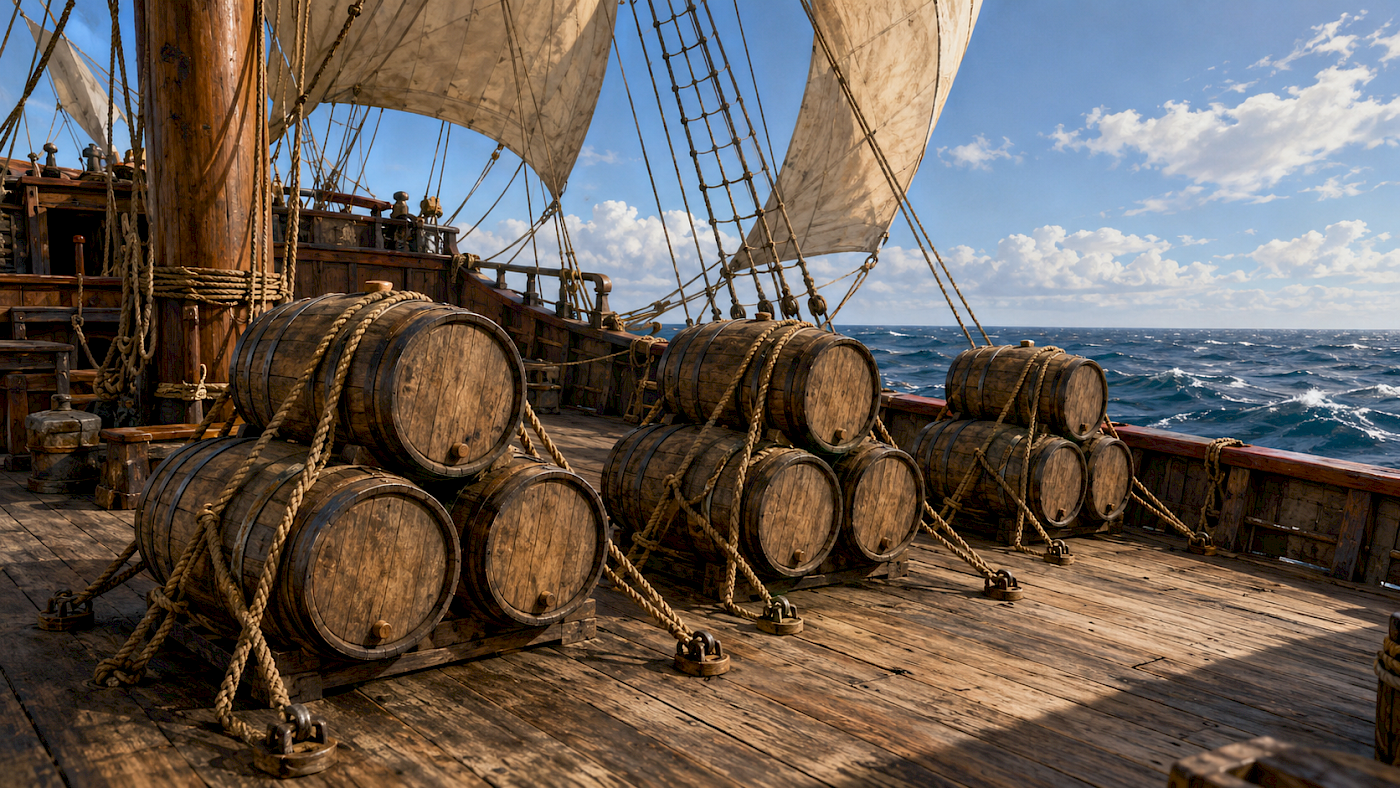
What happens when whiskey goes to sea? For centuries, distillers and merchants noticed that spirits carried aboard ships often matured differently—and sometimes remarkably better—than similar barrels resting quietly in a warehouse. The ship’s constant rolling kept the spirit moving through the oak, while changing temperatures and air pressure encouraged an ongoing exchange between wood and liquid.
At Seven Springs Farm, our barrels never leave Indiana. Instead, between ultrasound cycles, we gently rock the maturation chamber to recreate the useful part of that ocean voyage. Because toasted and charred oak chips provide far more exposed wood surface than a barrel, the moving spirit continually encounters fresh extraction sites. It is a cruise to nowhere—but the whiskey still benefits from the journey.
What Happens Inside the Maturation Chamber
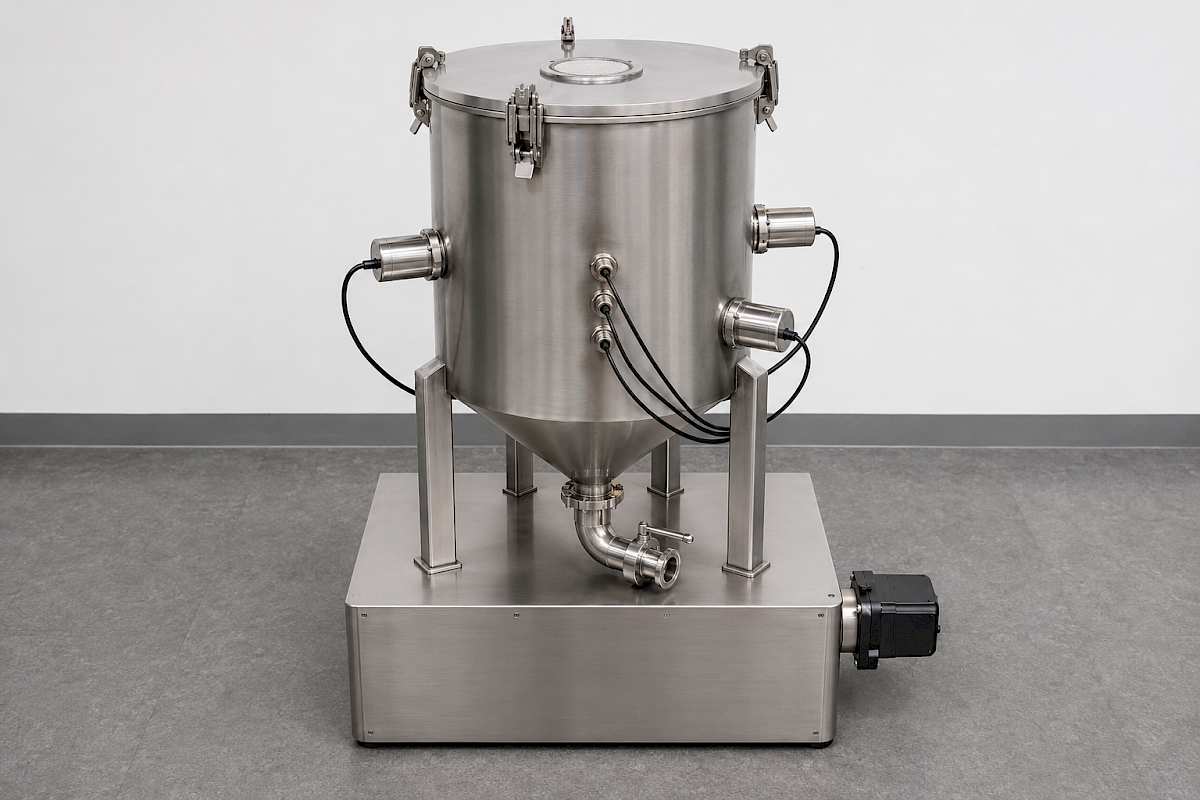
When the ultrasound is switched off, the maturation chamber begins to rock gently from side to side and front to back. The motion allows the toasted and charred wood chips to slosh through the distillate rather than simply resting in one place. Fresh spirit continually washes across the wood’s surface, moves through its pores and carries away the flavor, aroma and color compounds released from the toasted oak.
That movement matters because extraction gradually slows when the liquid immediately surrounding the wood becomes saturated. Rocking sweeps that concentrated layer away and replaces it with fresh distillate, allowing the exchange to continue. Because the chips expose far more wood surface than the inside of a barrel, even gentle motion creates thousands of constantly renewed points of contact—accelerating a process that otherwise depends upon years of quiet movement in a barrel.
What the Maturation Chamber Looks Like
When the ultrasound is switched off, the maturation chamber begins to rock gently from side to side and simultaneously front to back—this simulates the roll and pitch of a ships deck. The motion allows the toasted and charred wood chips to slosh through the distillate rather than simply resting in one place. Fresh spirit continually washes across the wood’s surface, moves through its pores and carries away the flavor, aroma and color compounds released from the toasted oak.
That movement matters because extraction gradually slows when the liquid immediately surrounding the wood becomes saturated. Rocking sweeps that concentrated layer away and replaces it with fresh distillate, allowing the exchange to continue. Because the chips expose far more wood surface than the inside of a barrel, even gentle motion creates thousands of constantly renewed points of contact—accelerating a process that otherwise depends upon years of quiet movement in a barrel.