Canning
Our Two Canning Process' Water Bath and Pressure
Since 1809-- Safe, shelf-stable food preservation and storage
We follow the USDA guidelines for canning foods. If you would like to learn more about how home canning works, you can download the USDA guidelines (they are free) at this link.
Water-Bath Canning
Water-bath canning is a traditional preservation method used for high-acid foods. Filled and sealed jars are completely immersed in boiling water and processed for a specified period of time. The heat destroys yeasts, molds, and other spoilage organisms while driving air from the jar; as the jar cools, a vacuum seal forms. Because boiling-water temperatures are not sufficient for safely processing low-acid foods, water-bath canning is limited to foods that are naturally acidic or have been properly acidified to a safe pH.
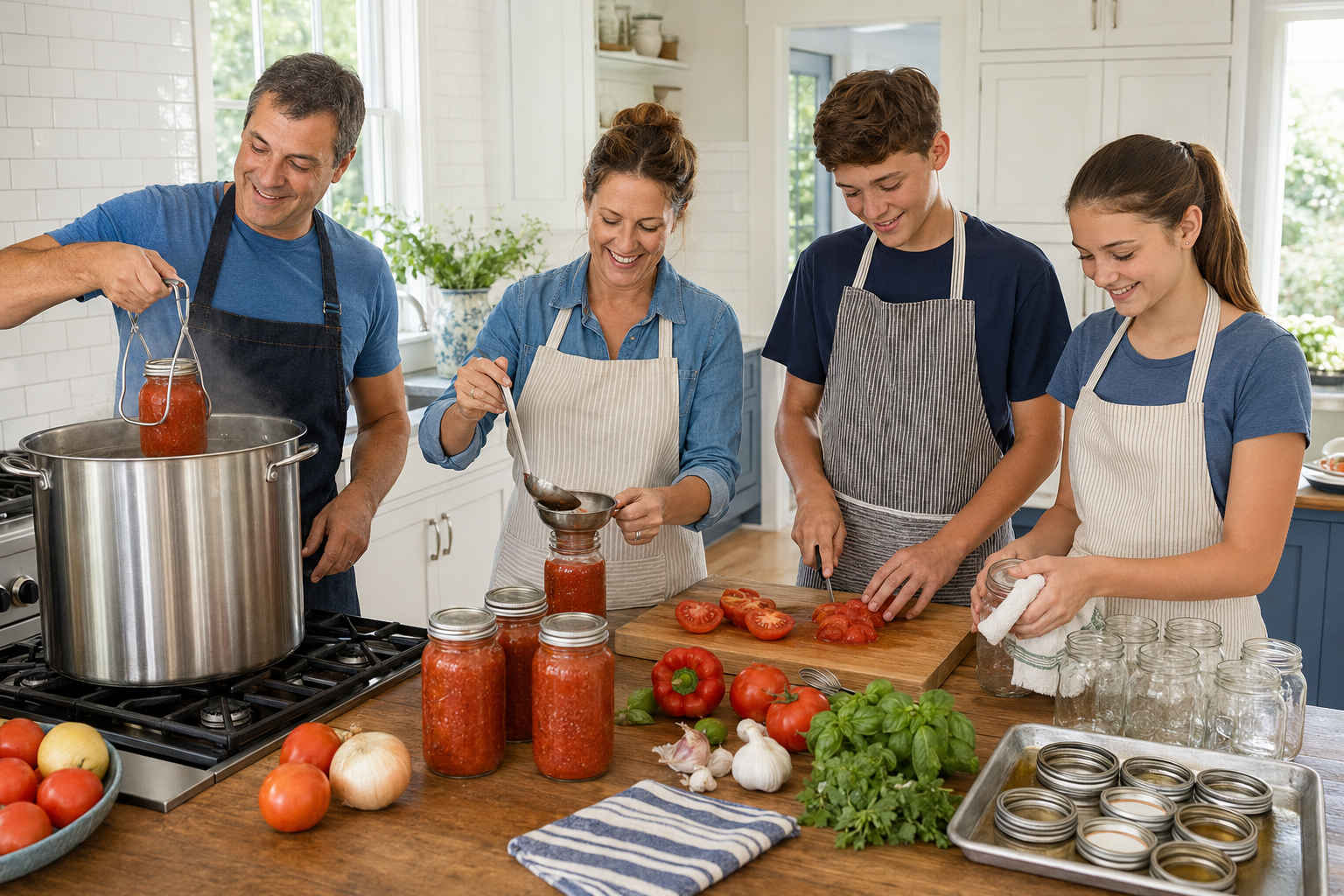
In our Italian Pantry, water-bath canning is used primarily for our tomato products and other appropriately acidified foods, as well as fruit-based preserves and similar high-acid products when applicable. Tomato products receive particular attention because the natural acidity of tomatoes can vary; products intended for water-bath processing are acidified as required and processed according to established food-safety procedures.
Pressure Canning
Pressure canning is used for low-acid foods that cannot be safely preserved in a boiling-water bath. By operating under pressure, the canner reaches temperatures well above the boiling point of water—typically about 240°F—which is necessary to destroy heat-resistant microorganisms and, most importantly, protect against Clostridium botulinum, the organism responsible for botulism. For this reason, low-acid foods such as vegetables, meats, poultry, and mixtures containing them require pressure processing rather than ordinary water-bath canning.
In our Italian Pantry, pressure canning is used for appropriate low-acid foods such as soups, stocks and broths, beans, vegetables, and meat-containing products. Because ingredients, jar size, food density, processing time, pressure, and altitude all affect safe processing, these products are prepared using established, tested procedures rather than simply extending the processing time used for water-bath canning.
Why We Don't Can Dairy Products
You may notice that our shelf-stable Italian Pantry products do not contain milk, cream, cheese, butter, or other dairy ingredients. This is intentional. Dairy products are low-acid foods, and their combination of moisture, protein, and fat makes safe shelf-stable canning particularly challenging. Fat can also interfere with heat penetration and may protect bacterial spores from heat. There are no generally accepted USDA home-canning processes for simply adding dairy ingredients to foods such as soups or sauces and then pressure canning them for room-temperature storage.
Instead, we use one of two approaches. Foods containing dairy are supplied as refrigerated products and kept under refrigeration, or we prepare a shelf-stable canned base without the dairy. When using a canned base, the customer simply adds the specified milk, cream, half-and-half, cheese, or other dairy ingredient while heating the food at home. This gives us the flavor and richness the finished recipe was designed to have without compromising the conservative food-safety standards we use for our canned products.
For readers interested in the technical details, processing times, and specific requirements, we provide a link (above)to the USDA canning guidelines.